Read as strata rather than as a ladder. Each band below sets out what the posting was, what the institution behind it is responsible for, why the role matters professionally, and what the available evidence documents.
1996200120062011201620212026
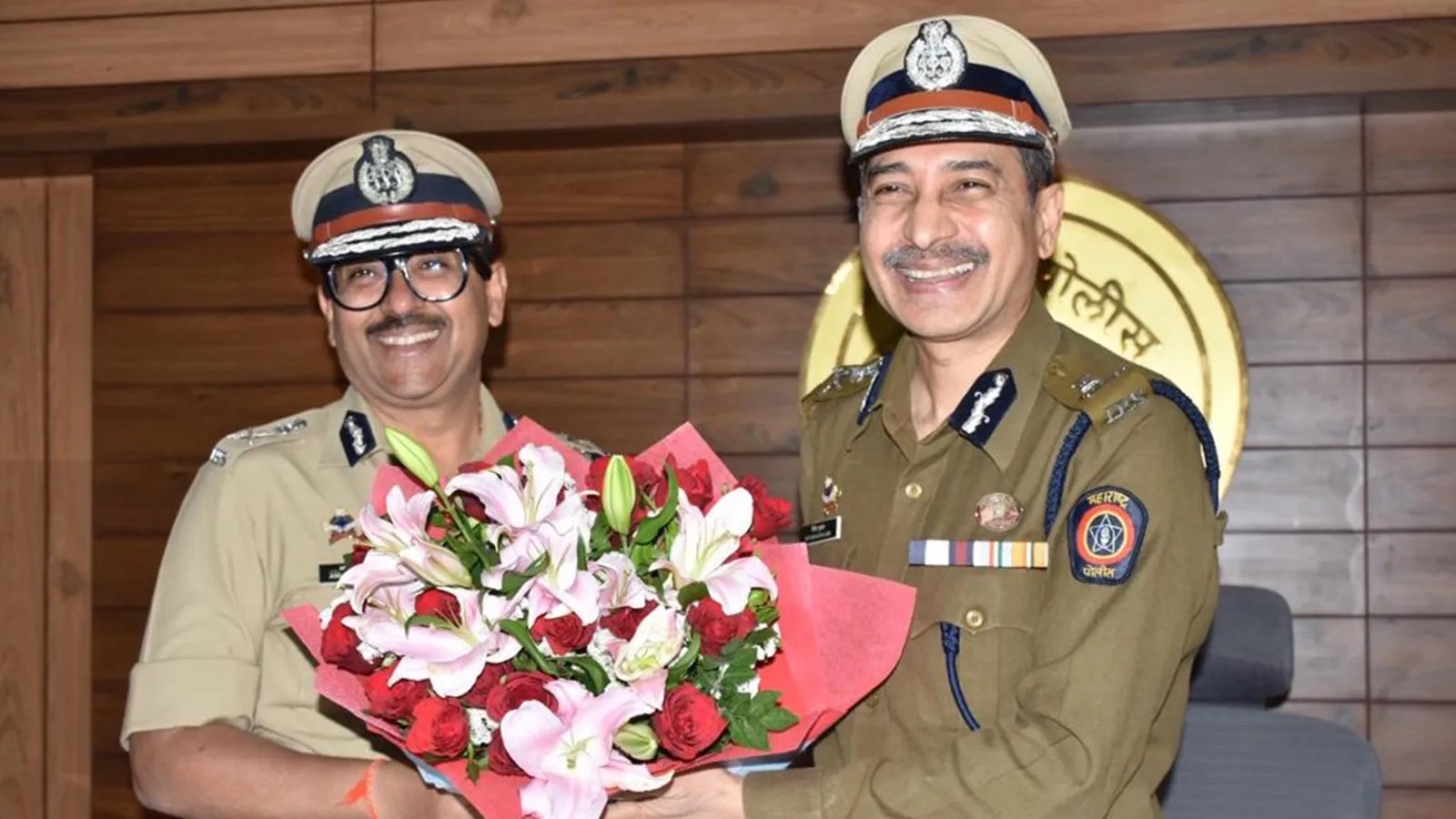
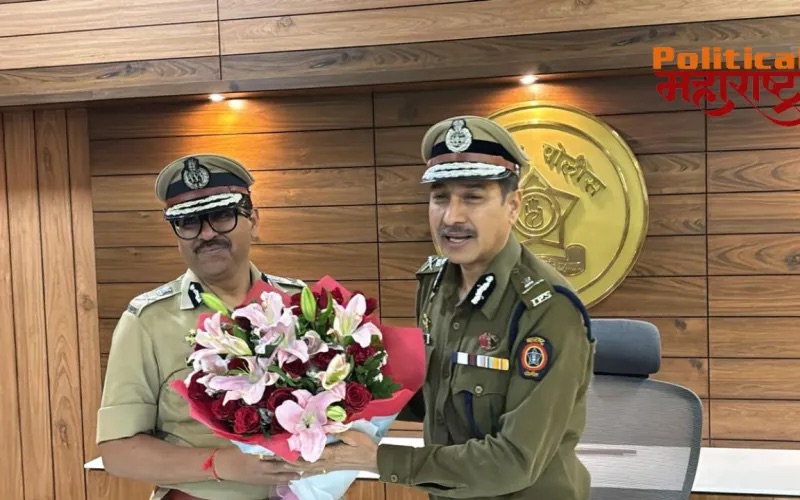
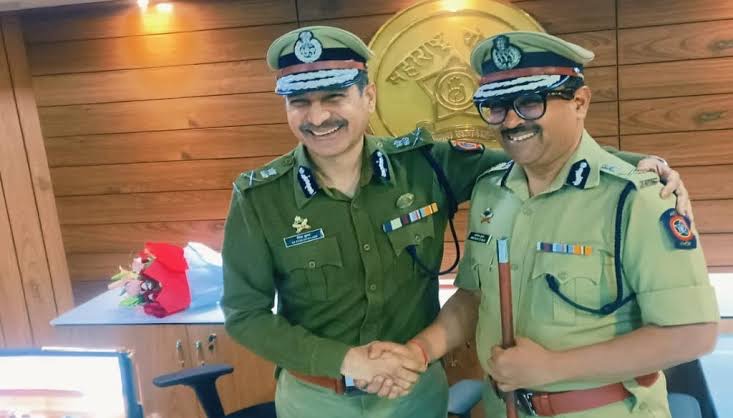
Handover of charge, Pune City Police Commissionerate, February 2024C 01
A note on dates. Where a government posting record or contemporaneous report fixes a date, it is given. Where the public record establishes that a posting was held but does not fix its period — which is the case for several mid-career appointments — the period is shown as not published rather than estimated. The order of those appointments is likewise not asserted.
1995 – 1996
Entry into the Indian Police Service
Union Public Service Commission · Cadre allotment: Maharashtra
Responsibility
Selection, probation and induction training preceding first field posting.
Context
The Indian Police Service is an All India Service: officers are recruited centrally through the Civil Services Examination and then allotted to a state cadre in which they serve. Amitesh Kumar qualified through the 1995 examination — reporting at the time of his Pune appointment placed him at 59 on the merit list — and was allotted Maharashtra. His date of joining the service is recorded as 5 September 1996.
Significance
Cadre allotment is the single most consequential fact in an IPS career, because it fixes the policing environment an officer will work in for three decades. Maharashtra combines the country's largest commissionerate system with substantial rural districts and a full set of state specialist agencies.
From 1997
Assistant Superintendent of Police
Solapur District, Maharashtra
Responsibility
Sub-divisional charge under district supervision: station oversight, investigation, law and order on the ground.
Context
The first independent charge of an IPS probationer is a police sub-division. It is where an officer learns registration and investigation as they actually work, how a police station is run, and how a jurisdiction's law-and-order problems present themselves before they become files.
Significance
Solapur is a district with a substantial urban core and an extensive rural hinterland — a first posting that exposes an officer to both settings at once. Reporting on his career consistently places this as his first field appointment.
Period not published
Superintendent of Police
Solapur · Aurangabad (Rural)
Responsibility
Full charge of a district police force: crime, law and order, personnel, and coordination with the district administration.
Context
A Superintendent of Police is the head of the police in a revenue district and works alongside the District Magistrate. The role carries responsibility for every police station in the district, for the district's crime position, and for the deployment and welfare of its entire force.
Significance
District command is the first posting in which an officer is answerable for outcomes across a whole jurisdiction rather than a segment of one. Aurangabad (Rural) — the district now designated Chhatrapati Sambhajinagar — brought a large and varied rural charge in the Marathwada region.
Period not published
Deputy Commissioner of Police
Nagpur City · Mumbai
Responsibility
Charge of a police zone or division within a metropolitan commissionerate.
Context
Under the commissionerate system a metropolitan force is divided into zones, each held by a Deputy Commissioner of Police. The DCP is the working command layer of a city force: the officer who holds several police stations, their crime position and their public order responsibilities together.
Significance
Serving as DCP in both Nagpur and Mumbai gave him working knowledge of two very different metropolitan forces — and, in Nagpur's case, of the city he would later command.
On an official visitC 04
Period not published
Additional Commissioner of Police, Anti-Terrorism Squad
Maharashtra ATS
Responsibility
Senior supervisory charge within the state's counter-terrorism agency.
Context
The Maharashtra Anti-Terrorism Squad is a specialised state agency responsible for the investigation and prevention of terrorism-related offences, and for liaison with central agencies. Its work is investigative and intelligence-led rather than territorial.
Significance
Specialist agency service introduces a different discipline from territorial command: casework built for prosecution, sustained inter-agency coordination, and information handling under restriction. It is one of the postings that distinguishes his record from a purely territorial career.
Period not published
Commissioner of Police, Amravati
Amravati City, Vidarbha
Responsibility
First full commissionerate command: operational and magisterial authority over a city police jurisdiction.
Context
Amravati is a divisional headquarters city in the Vidarbha region with its own police commissionerate. Under the commissionerate system, the Commissioner of Police holds executive magisterial powers in addition to command of the force — including preventive detention proposals and the regulation of public assembly.
Significance
The first commissionerate is where an officer takes on the combined operational and magisterial responsibility that defines urban police command in Maharashtra. It is the appointment that precedes charge of a major city.
Period not published
Special Inspector General of Police, Aurangabad Range
Marathwada
Responsibility
Supervision of the district police forces within the range.
Context
A police range groups several districts under a single supervisory officer. The range head is not a direct commander of stations but the layer that inspects, coordinates and holds district superintendents to account across a region.
Significance
Range supervision is where an officer works on other people's jurisdictions rather than his own — a shift from doing to inspecting, and a standard step toward senior command.
Period not published
Joint Commissioner of Police (Traffic)
Mumbai
Responsibility
Command of the traffic police of India's most congested metropolitan area.
Context
Mumbai's traffic command is a large standing organisation dealing with a road network under permanent stress and continuous construction. The work is a mixture of enforcement, engineering coordination with civic authorities, and signal and junction management.
Significance
Traffic administration is the most visible form of policing to the ordinary citizen and the one most dependent on technology and inter-departmental work. Both themes recur in the traffic priorities he set out publicly on taking charge in Pune.
2019 – 2020
State Intelligence Department
Mumbai · Joint Commissioner rank
Responsibility
Senior charge in the state's intelligence organisation.
Context
The State Intelligence Department collects and assesses information bearing on public order, security and the state administration's decision-making. Posting records place him in the department at Joint Commissioner rank in 2019 and again on return in 2020, immediately before the Nagpur commissionership.
Significance
Intelligence work sits upstream of operational policing. It shapes how an officer subsequently uses information in command — the basis for the hotspot mapping and offender-prioritisation approach visible in his later public statements.
Sept 2020 – Jan 2024
Commissioner of Police, Nagpur City
Nagpur, Maharashtra
Responsibility
Command of the Nagpur City Police across a full commissionerate jurisdiction for more than three years.
Context
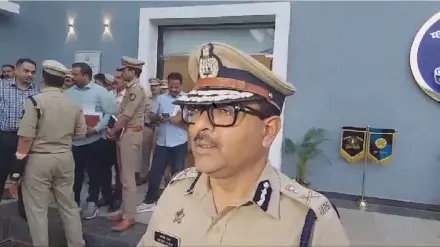
Nagpur is the second capital of Maharashtra and seat of the state legislature's winter session, which brings a substantial protective-security and public-order load in addition to ordinary city policing. He took charge in September 2020, during the COVID-19 period, and completed three years in the post on 4 September 2023 — reported by Nagpur Today as the longest tenure of any Commissioner of Police in the city.
Significance
The tenure is the most fully documented stretch of his career. Reporting at its close recorded a 35 per cent fall in murder cases in 2022 — 65 cases, described as the lowest in twenty-one years — with February 2022 registering no murders at all, the first such month in a decade. It also recorded 150 detentions under the Maharashtra Prevention of Dangerous Activities Act, action under the Maharashtra Control of Organised Crime Act against 204 history-sheeters across 34 MCOCA orders, and, on the administrative side, 958 posts filled including 171 on compassionate grounds and health screening for roughly 4,000 of about 8,000 personnel.
Command of the Pune City Police: law and order, crime, traffic, protective security, women's and children's safety, narcotics, cyber and economic offences.
Context
He took charge on 1 February 2024, succeeding Retesh Kumaarr. On assuming office he described “basic policing” as the cornerstone of the work and said visible policing would be intensified; he identified traffic decongestion, the safety of women and children, cybercrime and narcotics as priority areas, and set out an approach of identifying and acting against the most active offenders attached to each police station.
Significance
Pune combines a large student population, a major information-technology workforce and a dense historic core. By mid-2026 the commissionerate was publishing comparative crime figures for the jurisdiction — declines against 2023 in attempted murder, chain snatching, robbery, house-breaking, theft and vehicle theft — and setting them against National Crime Records Bureau rankings for metropolitan cities.
The postings above describe positions. The next chapter examines the work inside them — decision, coordination, people, resources, accountability and response.
On attribution. Statistics quoted on this page describe the work of a police force, not of one individual. Where a figure is given it belongs to the Nagpur City Police or the Pune City Police as institutions during the period stated, and is reproduced from the published source named beside it.