The
person
Behind a designation there is a working life: where an officer studied, when he entered the service, what he has actually been made responsible for, and what the record shows him doing with it. This page sets that out plainly.
01 Professional background
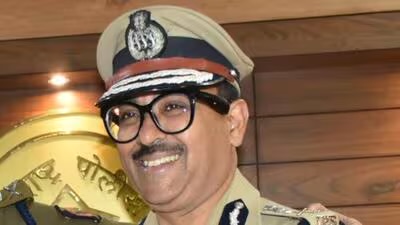
Amitesh Kumar belongs to the 1995 batch of the Indian Police Service and has served his entire career in the Maharashtra cadre, joining the service on 5 September 1996. He is originally from Bihar.
The Maharashtra cadre is among the more demanding in the country to serve in, because it contains three distinct policing environments within one state: dense metropolitan commissionerates in Mumbai, Pune, Nagpur and elsewhere; large rural districts; and a set of specialised state-level agencies including the Anti-Terrorism Squad and the State Intelligence Department. His postings have run across all three.
02 Education
He is a graduate in Economics. Service records list his qualification as B.A. (Honours) in Economics; press profiles published at the time of his Pune appointment report that he took the degree at St Stephen's College, Delhi. He is also reported to hold postgraduate qualifications in law and in cyber law.
The awarding institutions and years for the postgraduate qualifications are not published in any source that could be verified, and are therefore not stated here.
Sources: Indian Police Service qualification record; The Free Press Journal, 4 February 2024.
03 Entry into public service
He entered the Indian Police Service through the Union Public Service Commission's Civil Services Examination of 1995 as a direct recruit; reporting at the time of the Pune appointment placed his position on the merit list at 59. He was allotted the Maharashtra cadre and, after training, was posted to Solapur district, where he was appointed Assistant Superintendent of Police in 1997.
The first years of an IPS officer's service are spent under district supervision precisely because that is where the working substance of policing sits — station-level registration and investigation, the handling of assemblies and disputes, and the routine administrative load that keeps a district functioning.
04 Professional development
His career moved through the standard progression of the service, but with an unusually wide spread of function. He held district charge as Superintendent of Police in Solapur and in Aurangabad (Rural), and metropolitan divisional charge as Deputy Commissioner of Police in Nagpur and in Mumbai.
Beyond territorial command he served in specialised roles: as Additional Commissioner of Police with the Anti-Terrorism Squad, in the State Intelligence Department in Mumbai, and as Joint Commissioner of Police (Traffic), Mumbai. He also held supervisory charge above district level as Special Inspector General of Police, Aurangabad Range.
That combination — territorial, specialist and supervisory — is what the service treats as preparation for city command. His postgraduate study in cyber law sits alongside it, and cybercrime capability has been an explicit priority in his public statements as a commissioner.
05 Major responsibilities
He has commanded three police commissionerates:
- Amravati — Commissioner of Police.
- Nagpur City — Commissioner of Police from September 2020 until the Pune appointment in 2024. Nagpur Today reported the tenure as the longest served by any Commissioner of Police in that city.
- Pune City — Commissioner of Police since 1 February 2024.
A commissioner of police in Maharashtra holds not only operational command of the force in the jurisdiction, but also the magisterial powers that come with the commissionerate system — including preventive action under the Maharashtra Prevention of Dangerous Activities Act and the approval of proposals under the Maharashtra Control of Organised Crime Act.
06 Current role
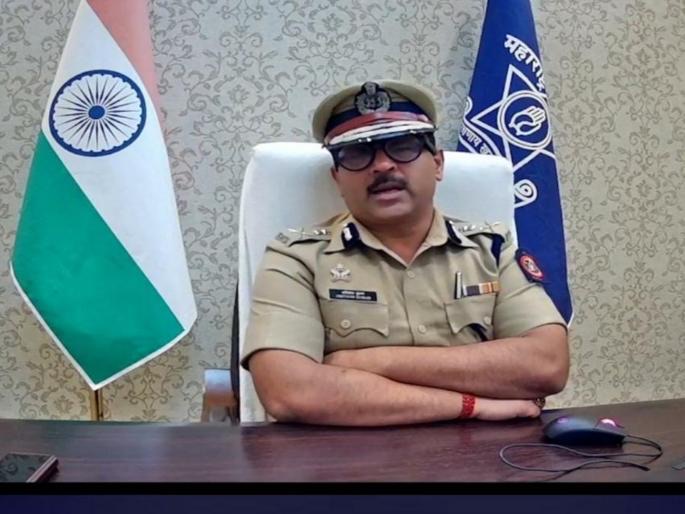
As Commissioner of Police, Pune City, he heads one of Maharashtra's largest urban policing jurisdictions. On taking charge he set out the areas he intended to work on: law and order, crime prevention and detection, traffic management, protective security, the safety of women and children, cybercrime, and economic offences — the whole of what he described as “basic policing”.
Pune's particular character shapes the job. It is a major education city and a large information-technology employment centre, which puts student populations, young working women and a substantial night-time economy inside the same jurisdiction as dense old-city neighbourhoods and rapidly expanding peripheral suburbs.
07 Areas of experience
- Urban police command — commissionerate charge at Amravati, Nagpur City and Pune City.
- District policing — superintendence in Solapur and Aurangabad (Rural).
- Organised crime and preventive law — documented use of MCOCA and MPDA action against repeat offenders during the Nagpur tenure.
- Counter-terrorism — Additional Commissioner of Police, Anti-Terrorism Squad.
- Intelligence — State Intelligence Department, Mumbai.
- Traffic administration — Joint Commissioner of Police (Traffic), Mumbai, and stated traffic priorities in both Nagpur and Pune.
- Cybercrime and economic offences — postgraduate study in cyber law; stated build-up of staffing and equipment for cyber investigation in Pune.
- Narcotics enforcement and prevention — enforcement action combined with sustained awareness work in schools, colleges and universities in Pune.
08
Academic
record
Only qualifications that appear in service records or in reporting that could be verified are listed. Where an institution or a year is not on the public record, it has been left blank rather than estimated.
A
B.A. (Honours), Economics
Recorded in his Indian Police Service qualification entry. Press profiles published at the time of the Pune appointment name St Stephen's College, Delhi as the institution.
B
Postgraduate study in law
Reported in press profiles of the officer. The awarding institution and year are not published in any verifiable source and are therefore not stated.
C
Postgraduate study in cyber law
Reported in press profiles of the officer. Relevant to the cybercrime and economic-offence priorities he has set out publicly as a commissioner.
Source: The Free Press Journal interview, 4 February 2024; Indian Police Service qualification record for the Maharashtra cadre.
09
From profile to record
The next chapter sets out the postings themselves — period, position, jurisdiction and what each role actually carried.
Layers of experience