Chapter 05 The Human Scale Pune City · 2024 — 2026
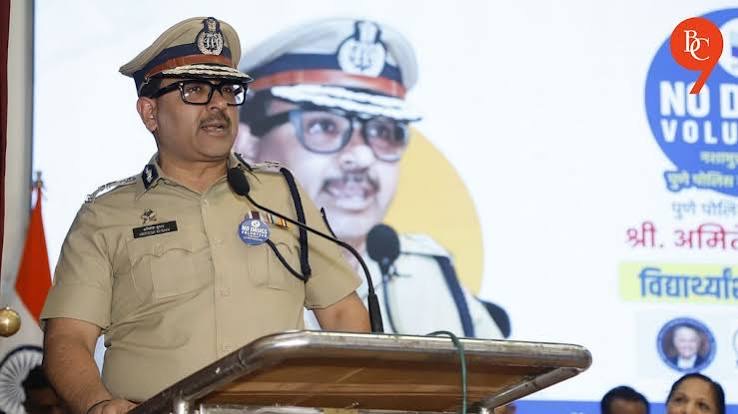
Amitesh Kumar addressing students and citizens at a Pune Police drug-awareness programme

The human
scale

A police force is measured in headlines by what it prevents and detects. It is experienced by the public in something much smaller: whether the station answered, whether the complaint was taken, whether the officer at the counter treated the person in front of them as a citizen.

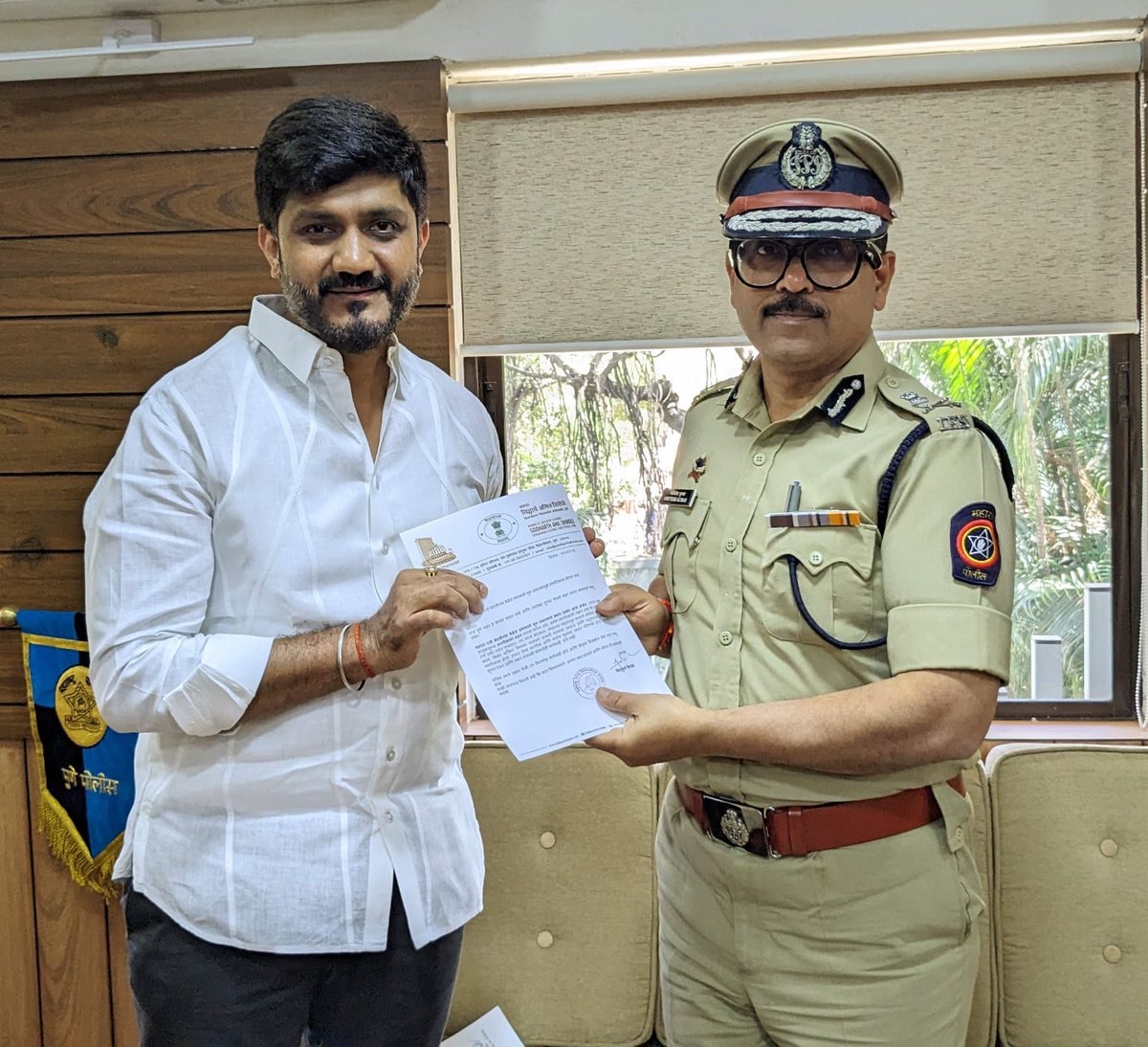
Amitesh Kumar receiving a citizen at the commissioner's office and handing over an official letter
At the commissioner's officePS 02
01

Accessibility

The commissioner's office is a public office. Citizens, representatives and delegations come to it with grievances that have not been resolved lower down the system, and the working test of accessibility is whether that route stays open and whether it produces a result rather than a hearing.

Reporting from the Nagpur tenure records the pattern directly: a resident's visit to the commissioner's office followed by a detection target being set for the investigating teams. Access matters when it converts into instruction.
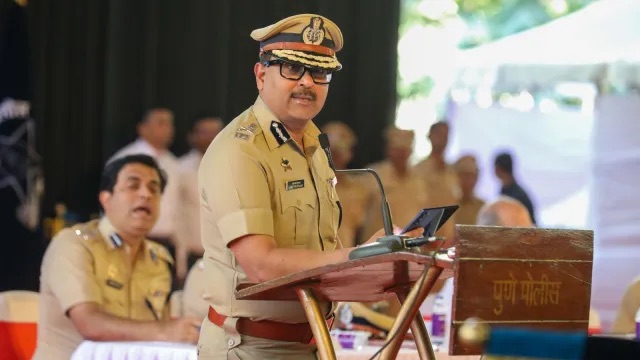
Amitesh Kumar speaking from a Pune Police lectern at a community programme, a presentation screen behind him
Community programme, PunePS 04
02

Communication

Public communication is part of the job rather than an accessory to it. A police force that explains what it is doing — where enforcement will be concentrated, what a rule change means, what a set of figures actually shows — reduces the space in which rumour operates.

On taking charge in Pune he stated the traffic position in exactly those terms: that regulation and decongestion would be based on evidence-based enforcement and deterrence, and that helmet use was mandatory, like seat belts, and would be implemented as per the rules. Stating a rule publicly before enforcing it is itself a form of fairness.

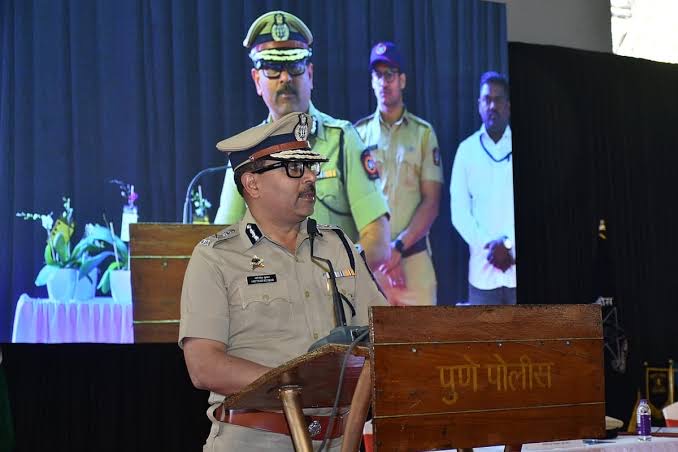
Amitesh Kumar speaking at a Pune Police public event alongside other officers
Pune Police public eventPS 03
03

Responsiveness

Speed is a measurable public good in policing, because delay compounds harm. The commissionerate has reported it as such: in May 2026, after a gang-related attempt to murder, all six suspects were arrested within ten hours and the case was taken forward under the Maharashtra Control of Organised Crime Act.

Response time is also an institutional signal. It tells the public that a case will be worked, and it tells the offender that the interval between the act and its consequence is short.

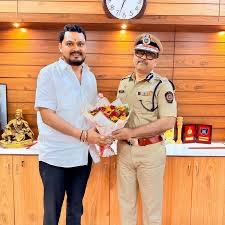
Amitesh Kumar receiving a visitor at the commissioner's office
Receiving a visitorPS 05
04

Dignity and grievance

Most contact between a citizen and the police is not about a crime in progress. It is about a complaint, a verification, a document, a dispute between neighbours. How those encounters are handled determines whether people come back the next time something serious happens.

Institutional attention to the people inside the force belongs to the same question. The Nagpur record notes health screening for roughly half the force and transparency in the transfer process — conditions that shape how officers behave at the counter as much as any instruction about courtesy does.

Citizen-facing programmes on the record in Pune

Secure Horizon for Youth

An anti-narcotics awareness programme held on 17 July 2026 at the Ganesh Kala Krida Kendra, Swargate, attended by senior police officers, education officials, college administrators and students from schools and colleges across the city. The programme combined a presentation on the drug problem, value-based education and career guidance, a short film, and a collective pledge.

Campus Connect & Drug-Free Pune

A standing engagement with educational institutions on drug awareness, alongside discipline, cyber safety, women's safety and traffic awareness. It runs beside the enforcement side of the campaign, in which police stations and the crime branch's anti-narcotics cell act at identified consumption hotspots.

Workplace safety with the IT sector

A seminar held for information-technology employees at Magarpatta, attended by more than a thousand employees, directors, engineers and students, covering workplace challenges, women's safety, cyber security and traffic. He recommended weekly meetings between police stations, company HR heads and security heads to stay aware of employees' wellbeing.

Sources: Punekar News, 17 July 2026; The Bridge Chronicle; The Free Press Journal.

05

Public confidence
is infrastructure

It is built the same way physical infrastructure is: slowly, through things that mostly go unnoticed, and it fails visibly when it fails at all.

Confidence in a police force is not a matter of sentiment. It shows up in behaviour that can be observed: whether people report offences at all, whether witnesses come forward, whether a woman travelling home late believes the route is watched.

Measures taken in Pune address that directly. The commissionerate has described CCTV coverage of twenty-one ghats and tekdis — the riverside steps and hillside walking areas used heavily by residents at dawn and dusk — together with emergency call boxes, and corporate sensitisation on workplace harassment.

None of these is dramatic. Cameras on a hillside path and a working call box are small pieces of civic equipment. Their value lies in what they change about a decision a person makes before leaving the house.

The wider state programme launched in August 2025 sits behind them: a command and control centre for the city, five mobile surveillance vans, and an intelligent traffic management system integrating 503 signal junctions.

Sources: The Free Press Journal, 6 May 2026; News on AIR, 8 August 2025.

“Youth must remain addiction-free to bring positive change to society. I appeal to the younger generation to come together and actively participate in the collective fight against the menace of narcotics.”

Amitesh Kumar · Secure Horizon for Youth, Pune · 17 July 2026
Professional perspectives