Chapter 06 Ways of Seeing Seven themes

Ways of
seeing

01Basic policing 02Visible policing 03Organised crime 04Narcotics and the young 05Technology and traffic 06Women and children 07Data and accountability Every quotation verbatim

01

Basic policing

Every police reform argument eventually returns to the same unglamorous question: can the force perform its core functions reliably? Registration of offences without discouragement, investigation that survives a courtroom, patrolling that is actually done, traffic that is regulated, and the protection of people who cannot protect themselves.

This is the frame Amitesh Kumar has used consistently in public since taking charge in Pune. On assuming office he described basic policing as the cornerstone of the work, listing under it law and order, crime prevention, traffic management, protective security, women's safety, cybercrime, economic offences and child safety.

The reason the frame matters is structural. Specialist capability — cyber units, anti-narcotics cells, technical surveillance — is expensive and slow to build, and it is worthless if the ordinary station cannot register a complaint properly. Prioritising the base is a resource judgement as much as a philosophical one.

“We will engage with all senior officials to devise plans for controlling violent offences and addressing serious crimes.”
Amitesh Kumar · interview, The Free Press Journal · 4 February 2024

02

Visible policing and public confidence

Visibility is one of the few policing interventions whose logic is simple: a uniformed presence at the right place and the right hour changes the calculation of the person considering an offence, and changes the confidence of everyone else on the street.

The difficulty is that visibility is expensive in the scarcest resource a force has, which is officer hours. Deploying it well therefore depends entirely on knowing where and when it is needed — which turns a patrolling question into an analysis question.

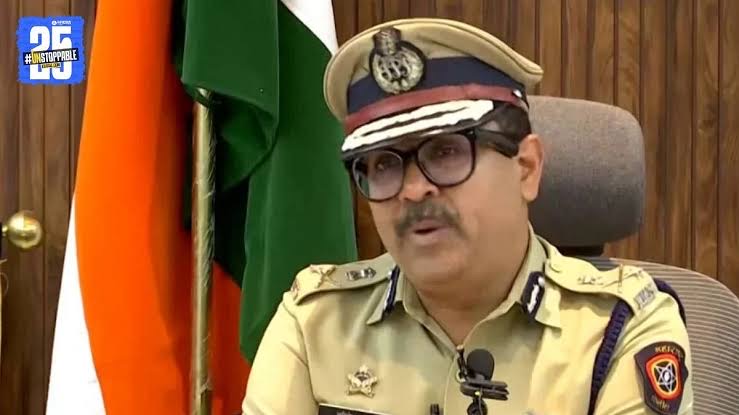
Amitesh Kumar during a broadcast interview discussing policing in Pune
In interviewPR 02

“We will analyze crime statistics, law and order issues, drug hotspots, areas vulnerable to women's safety, and ways to enhance visible policing and police effectiveness.”

Amitesh Kumar · on taking charge, Pune · Punekar News, 2 February 2024

03

Organised crime and deterrence

A well-established finding in criminology is that a small proportion of offenders accounts for a large proportion of serious crime. The operational consequence is that a force which identifies and concentrates on that group can move the aggregate figures for a whole city.

Maharashtra gives a commissioner two specific instruments for this. The Maharashtra Prevention of Dangerous Activities Act permits preventive detention of persons whose activity threatens public order. The Maharashtra Control of Organised Crime Act, enacted in 1999, provides a distinct framework for prosecuting organised criminal syndicates, with stricter procedure and stronger penalties than ordinary law.

The Nagpur record shows both used at scale: 150 detentions under the MPDA Act, and action under MCOCA against 204 history-sheeters across 34 orders. Reporting from the same tenure records a 35 per cent fall in murder cases in 2022, attributed by the commissioner to continuous preventive action against known offenders. In Pune, reporting in 2026 recorded that almost all major gangs in the jurisdiction had been prosecuted under MCOCA.

Instruments of this kind carry a corresponding obligation, because preventive and special-law powers restrict liberty on the basis of anticipated rather than proven conduct. Their legitimacy rests on procedure being followed and on the record being available for review.

“Stringent identification of such elements and taking strong deterrent action so that they understand that they would land themselves in great trouble.”

Amitesh Kumar · on repeat offenders · The Free Press Journal, 6 May 2026

04

Narcotics and the young

Pune has one of the largest concentrations of students in India, which makes narcotics both an enforcement problem and an education problem in the same jurisdiction. Cases registered under the Narcotic Drugs and Psychotropic Substances Act in the city rose over the five years to 2025, in both registrations and arrests.

The approach the commissionerate has described works along two lines at once. On enforcement, action against peddlers and suppliers, identification of consumers, and tracing supply forward and backward to establish the origin of contraband; in July 2026 a campaign described as Mission Clean was launched against public consumption of cannabis under the NDPS Act. On prevention, sustained engagement with schools, colleges and universities.

Enforcement alone cannot resolve a demand-side problem, and awareness alone cannot resolve a supply-side one. Running both is not a compromise between the two; it is the only configuration in which either has effect.

Amitesh Kumar explaining the Pune Police approach during a televised discussion
Explaining the approachPR 04

“A drug-free Pune is our motto, and we have initiated a drive.”

Amitesh Kumar · The Free Press Journal · 6 May 2026

05

Technology, traffic and the city

Traffic is the point at which most citizens meet the police most often, and in a city growing as fast as Pune it is also the problem least soluble by enforcement alone. Signal timing, junction geometry, road capacity and public transport all sit outside the police department.

The technology programme launched for the city in August 2025 reflects that division of labour: a command and control centre, five mobile surveillance vans, and an intelligent traffic management system using satellite technology to bring 503 signal junctions under coordinated control, alongside an urban mobility plan prepared for Pune and the metropolitan region development authority.

Coordinated signalling is a genuinely different proposition from isolated signals. A network in which junctions are timed against each other can move the same volume of traffic through the same roads with fewer stops — a capacity gain achieved without building anything.

“By 2029, the issue of traffic congestion in Pune city would be a matter of the past.”

Amitesh Kumar · The Free Press Journal · 6 May 2026

06

Safety of women and children

Safety for women in a city is produced by ordinary infrastructure as much as by policing: lighting, sightlines, the presence of other people, a route that is watched. Police measures work best when they are added to that rather than substituted for it.

The measures described for Pune are of that kind — CCTV coverage of twenty-one ghats and tekdis, emergency call boxes, and sensitisation of employers on workplace harassment. Alongside them sits direct engagement with the information-technology workforce, including a seminar at Magarpatta attended by more than a thousand employees and a recommendation that police stations meet company HR and security heads weekly.

The second half of that agenda — children — is less visible and no less demanding. The Nagpur record includes 92 accused held in seventeen child trafficking cases and 275 arrests under the law against immoral trafficking during the tenure.

“Our initial focus is on basic policing, with a particular emphasis on ensuring the safety of women and children.”

Amitesh Kumar · interview, The Free Press Journal · 4 February 2024

07

Data and public accountability

Crime statistics are a difficult public instrument. Recorded crime rises when reporting improves and when registration becomes easier, so a figure moving upward can indicate either a worsening problem or a better-functioning police station. Any serious public discussion has to hold both possibilities open.

That difficulty is exactly why the form of a response matters. In June 2026, replying to a Member of Parliament's characterisation of Pune's law-and-order position, the commissioner set out a detailed written case: comparative declines from 2023 across attempted murder, chain snatching, robbery, house-breaking, theft, vehicle theft and vehicle vandalism, together with the city's National Crime Records Bureau standing for 2024 — eighteenth of nineteen metropolitan cities on the rate of cognizable offences, fifteenth of nineteen on total offences under the penal code, and eleventh of nineteen on murder rate.

The argument can be examined because the basis for it was published. That is the standard a public institution should be held to, and it is a different standard from being right.

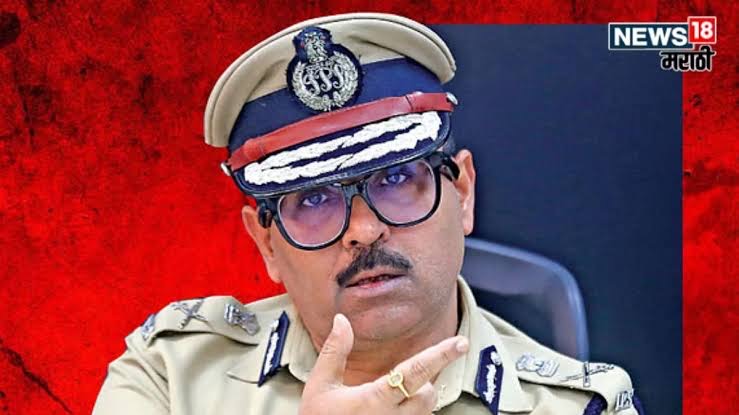
Amitesh Kumar during a policy discussion at the commissionerate
Policy discussionPR 03

“It is thus submitted that it is factually incorrect to state that Pune is the 5th highest in the country in crime or that it is the ‘Crime Capital’. On the contrary, Pune ranks as one of the safer cities, as per NCRB data.”

Amitesh Kumar · written reply to a Member of Parliament · reported by The Pioneer, 3 June 2026
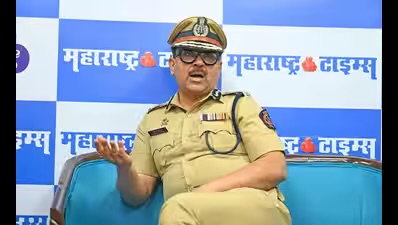
Amitesh Kumar seated for a newspaper interview
Newspaper interviewPR 01

Sources

Every quotation on this page is verbatim

No statement has been paraphrased inside quotation marks, and no view has been attributed to Amitesh Kumar that he has not stated publicly. Where a theme required context beyond his own remarks — on preventive law, on crime statistics, on traffic engineering — that context is presented as analysis, in the site's own voice.

Publications cited: The Free Press Journal (4 February 2024; 6 May 2026); Punekar News (2 February 2024; 17 July 2026); Nagpur Today (5 September 2023); The Pioneer (3 June 2026); News on AIR (8 August 2025); The Bridge Chronicle.

The record