Chapter 04 The System Behind the Decision Analytical

The system
behind the
decision

Command in a police organisation is not a matter of personal style. It is a structure of obligations. Six of them are set out here, each examined as a function of the office and read against what the record documents.

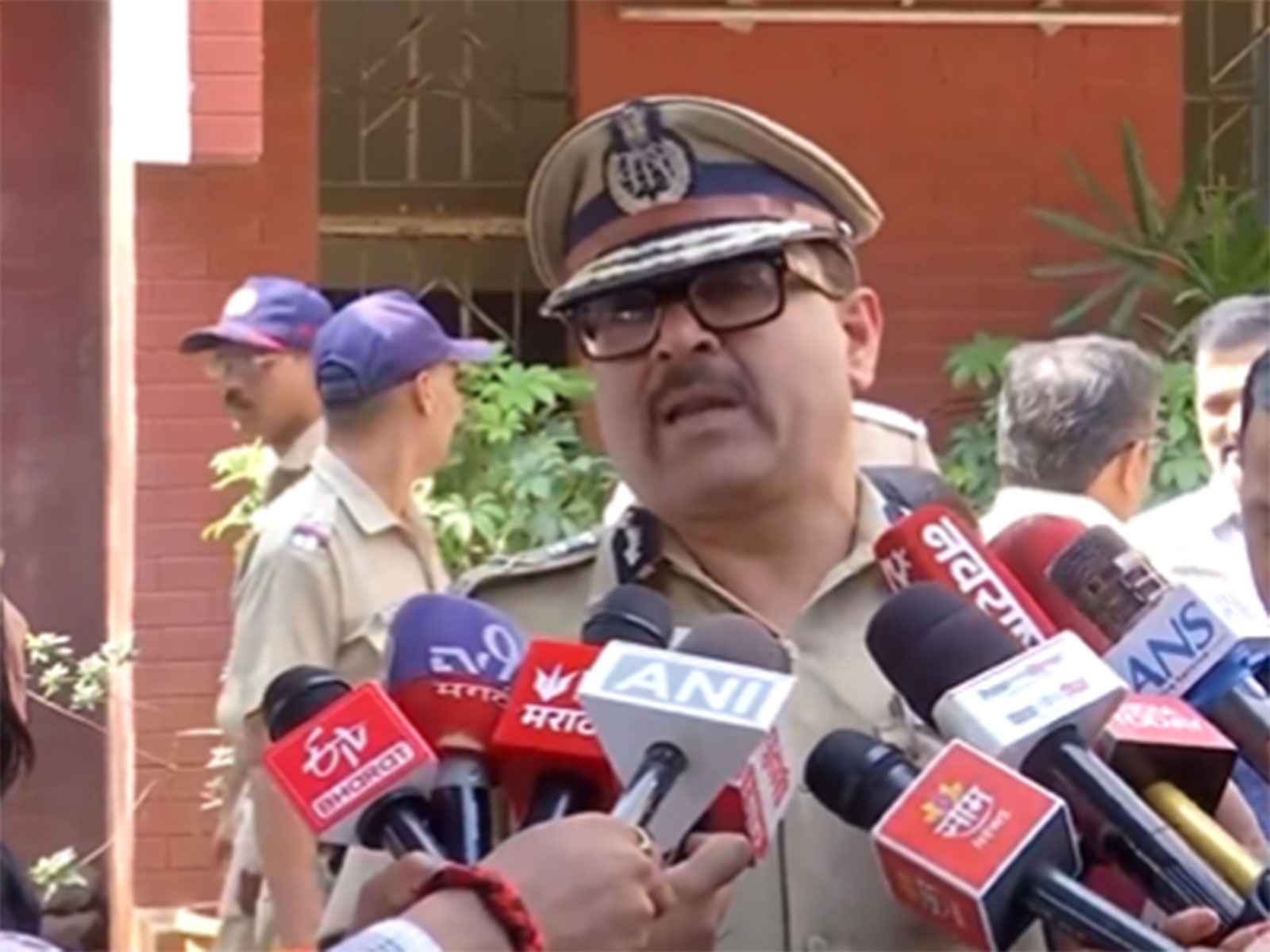
Amitesh Kumar briefing reporters in the field, surrounded by microphones, with police personnel behind him
Briefing at the sceneL 01

Framing

A commissioner does not make decisions alone. He makes them accountable.

The commissionerate system concentrates both operational command and executive magisterial authority in one office. That concentration is the reason the office is bound by procedure: preventive detention proposals, organised-crime approvals, the regulation of assembly and the deployment of the force all pass through documented processes that can be reviewed afterwards.

What follows treats leadership as those processes rather than as personality — and does not attribute to Amitesh Kumar a philosophy he has not stated.

Six functions of senior police command

01

Decision

The commissioner's decisions are mostly decisions about priority: which offences a limited force will be pushed against first, which locations will be held, and which individuals will be the subject of preventive action. On taking charge in Pune he described the method in operational terms — analysing crime statistics, law-and-order issues, drug hotspots and areas vulnerable for women's safety, and identifying and acting against the most active offenders attached to each police station.
02

Coordination

Almost nothing a city police force does is finished inside the force. Traffic depends on the municipal corporation and on road engineering; narcotics enforcement runs backward and forward along supply chains that cross jurisdictions; prosecution depends on the courts and on forensic services. The multi-pronged strategy he described for Pune in 2026 explicitly involved the municipal corporation, schools and colleges, and corporate employers alongside the police stations and the crime branch.

03

People

A commissionerate is first an employer. Its constables and officers work shifts under pressure, and their availability, health and morale determine what the force can actually do. The published account of the Nagpur tenure records this side of command directly: 958 posts filled, 171 of them on compassionate grounds; health check-ups arranged for roughly half of about 8,000 personnel; and transparency introduced into the internal transfer process.

04

Resources

Capability has to be built before it is needed. In Pune this has meant staffing and equipping cybercrime investigation, and working within a wider state programme: in August 2025 a command and control centre, five mobile surveillance vans and an intelligent traffic management system covering 503 signal junctions were launched for the city. Resource decisions are slow, procedural and rarely visible — and they set the ceiling on everything operational.

05

Accountability

A commissioner answers publicly for a jurisdiction he cannot personally supervise. In June 2026, responding to criticism of Pune's law-and-order position by a Member of Parliament, he replied in a detailed nine-page letter setting out comparative crime figures and the city's National Crime Records Bureau standing among metropolitan cities. Whatever view is taken of the exchange, the form of the response — documented, comparative, on the record — is the accountable form.

06

Response

Command is judged hardest in the days after a serious incident, when an investigation must be built while the public is watching it being built. In May 2024, after a fatal road crash in Kalyani Nagar involving a teenaged driver, the commissionerate moved to have the accused tried as an adult, proceeded against family members for attempting to substitute a driver and to influence evidence, and suspended two police personnel for dereliction of duty. Speaking at the time, he said the police had prepared what he described as a watertight case.

Sources: Punekar News, 2 February 2024; The Free Press Journal, 6 May 2026; Nagpur Today, 5 September 2023; News on AIR, 8 August 2025; The Pioneer, 3 June 2026; contemporaneous reporting on the May 2024 Kalyani Nagar case.

On the record

“My primary focus is on reinforcing basic policing, as criminal and illegal activities cannot be tolerated.”

Amitesh Kumar · interview, The Free Press Journal · 4 February 2024

“Basic policing” is not a modest phrase in a police organisation. It names the core functions a force must perform reliably before anything else is credible: registration of offences, investigation, patrolling, public order, traffic, and the protection of vulnerable people. Specialist capability is built on top of it, not instead of it.

The framing recurs across his public statements in both cities — visible policing, action against repeat offenders, and evidence-based traffic enforcement — and it is the most consistent documented feature of how he describes the work of command.

07

What the record
documents

Figures below describe the work of a police force during a stated period, reproduced from the published sources cited. They are institutional outcomes, not personal claims.

35%

Fall in murder cases, Nagpur, 2022

Reported at the close of the three-year tenure, alongside a 2022 total of 65 murder cases described as the lowest in twenty-one years.

204

History-sheeters under MCOCA, Nagpur

Action under the Maharashtra Control of Organised Crime Act across 34 orders, with 150 detentions under the MPDA Act over the same period.

958

Posts filled, Nagpur City Police

Recruitment against vacancies during the tenure, including 171 appointments made on compassionate grounds.

503

Signal junctions, Pune ITMS

Traffic signal junctions to be integrated under the intelligent traffic management system launched for the city in August 2025.

56%

Fall in chain snatching, Pune

Comparative figure for 2023 to 2026 published by the commissionerate, alongside declines in robbery (36%), attempted murder (27%) and vehicle theft (28%).

18/19

NCRB rank, cognizable offence rate

Pune's 2024 standing among nineteen metropolitan cities as cited by the commissionerate — the lower the position, the lower the rate.

Sources: Nagpur Today, 5 September 2023; News on AIR, 8 August 2025; The Pioneer, 3 June 2026.

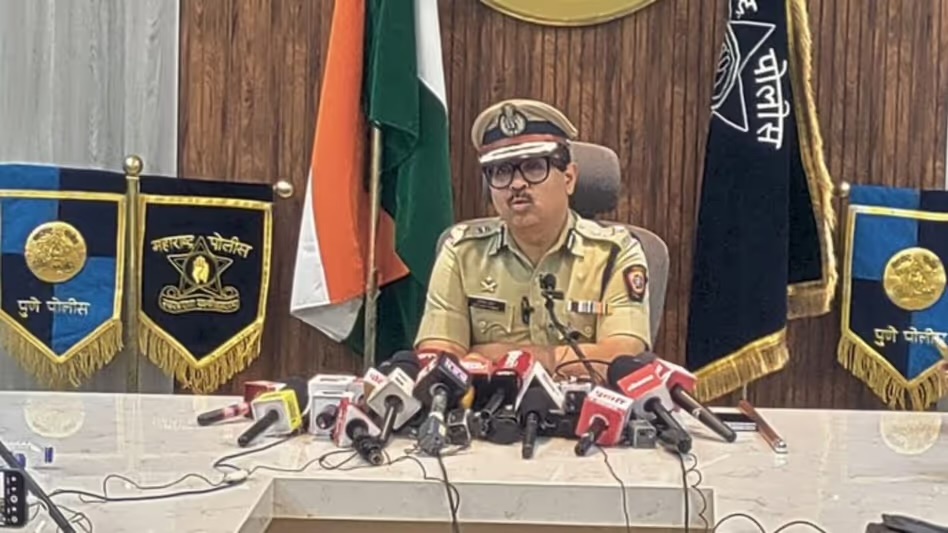
Amitesh Kumar addressing a press conference at the Pune City Police Commissionerate, departmental standards behind him
Commissionerate press conferenceL 03
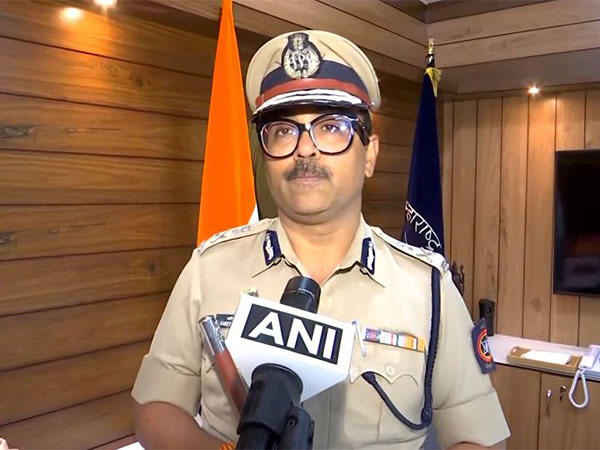
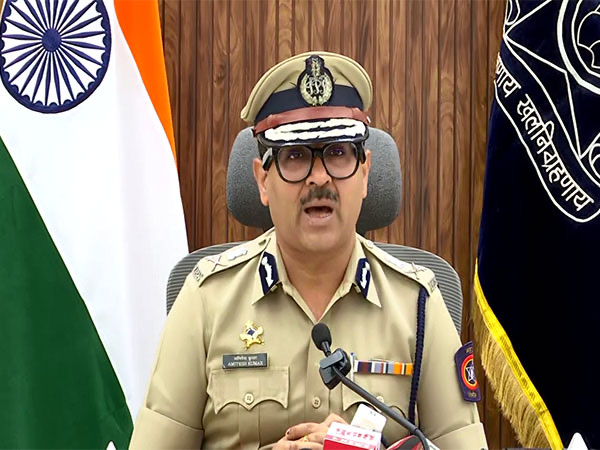
Amitesh Kumar giving an official briefing with the national flag and the Maharashtra Police standard behind him
Official briefingL 02
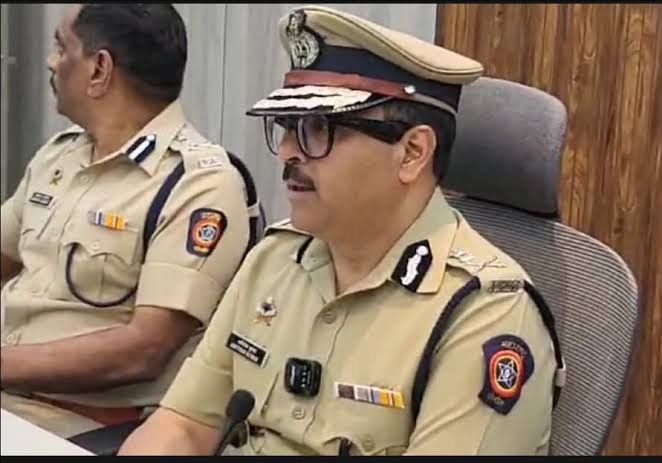
Amitesh Kumar seated beside a senior officer during a departmental review
Departmental reviewL 05
Amitesh Kumar making a statement to the press inside the commissioner's office
Statement to the pressL 04

Next

The same institution, at human scale

Command is one register. The other is the daily contact between a police force and the people who live inside its jurisdiction.

Public service